


9 Basketball Ball Handling Drills That Work

The ball gets exposed before the move ever fails. A high dribble, a lazy gather, eyes dropping to the floor - that is where defenders eat. The right basketball ball handling drills fix that fast, but only when they are trained with purpose, pace, and progression.
At King Of Bounce Training, we believe your best days are in front of you, and ball handling is one of the clearest places to see growth. A young player starts by learning control. A middle school athlete learns to attack space. A high school or college player learns how to keep the same handle under pressure, speed, and contact. The drills matter, but how you stack them matters even more.
Why basketball ball handling drills matter
A better handle is not just about looking quick. It changes your whole game. When you can control the ball without staring at it, you see help defenders earlier, make cleaner reads, and get to your spots on balance. That means better drives, better passes, and better shot preparation.
For younger players, ball handling builds comfort and confidence. For advanced players, it sharpens efficiency. That difference matters. A beginner may need simple rhythm and hand-strength work. An experienced guard may need tight-space counters, change of pace, and contact reads. If everyone does the same drill the same way, someone is not getting what they need.
Start with control before creativity
A lot of players rush to combos they saw online before they can own a basic pound dribble. That is backwards. Flash without control breaks down in games. Strong handlers learn to stay low, keep the ball outside their frame when needed, protect it when pressure comes, and change speeds without losing posture.
This is also where parents should pay attention. If your child is doing advanced-looking moves but still dribbles too high or loses the ball when changing direction, the answer is not more complicated moves. The answer is better fundamentals, coached the right way.
9 basketball ball handling drills that build real results
1. Stationary pound series
This is where discipline starts. Pound the ball hard at ankle height, then knee height, then waist height with each hand. The goal is not just surviving the rep. The goal is controlling the same strong bounce every time.
Young players should focus on posture, eyes up, and using fingertips instead of slapping the ball. Advanced players can add time challenges or resistance, but the standard stays the same - clean rhythm and no wasted motion.
2. Crossovers in place
A stationary crossover sounds simple until it is done right. The ball should move quickly across the body without drifting too far in front. Hips stay low, chest stays strong, and the off-hand stays active for protection.
If a player is popping up on every crossover, slow it down first. Speed only helps when the position is sound. One great rep beats ten sloppy ones.
3. Between-the-legs rhythm drill
This drill teaches timing as much as control. Players should work both directions and keep the ball tight to the body. Too many players swing the ball wide and call it a move. In games, wide handles get stripped.
For beginners, this may be a coordination challenge. That is fine. It depends on age and experience. A younger athlete may need to start with slower, deliberate reps before building pace.
4. Behind-the-back control drill
Behind-the-back dribbles are useful when pressure is tight and space is limited, but only if the ball stays protected. This drill should focus on keeping the dribble low and direct, not bouncing it in a big loop behind the body.
The trade-off here is simple. If a player forces this move too early, it becomes a turnover habit. If they avoid it completely, they miss a valuable pressure release. Good training introduces it at the right stage, then reinforces control.
5. Cone attack series
Set up cones in a straight line or slight zig-zag and attack each one with a specific move. Crossover at the first, between-the-legs at the second, behind-the-back at the third. This starts to connect isolated dribble work to actual movement.
The biggest coaching point is pace change. Do not glide through the whole line at one speed. Sell the hesitation, explode out of the move, and stay balanced after each change of direction. Handles become game-ready when they move defenders, not just when they look smooth in a workout.
6. Retreat dribble to re-attack
This drill is huge for guards and wings who face pressure. Start forward, retreat with control, then re-attack at an angle. It teaches players not to panic when defenders cut off the first drive.
A lot of athletes train only downhill moves. Real games are messier than that. Sometimes the first lane is gone. The retreat dribble creates space, resets the angle, and keeps the possession alive. That is winning basketball.
7. Two-ball dribbling for hand speed
Two-ball work can improve rhythm, coordination, and force production through the hands. It can also turn into empty noise if it is done without purpose. Keep it simple. Start with same-time pounds, then alternating pounds, then movement if the player is ready.
This drill is helpful, but it is not magic. It supports ball control. It does not replace single-ball game application. Players still need reps that transfer directly to live play.
8. Change-of-pace hesitation drill
Great ball handlers do not just move fast. They control tempo. This drill teaches players to slow the defender with a hesitation, then burst past the hip. The eyes, shoulders, and feet all have to sell the pause.
This is where older players separate themselves. Anybody can dribble hard for a few seconds. Skilled players know when to pause, when to shift, and when to explode. That is a different level of handle.
9. Live pressure ball handling
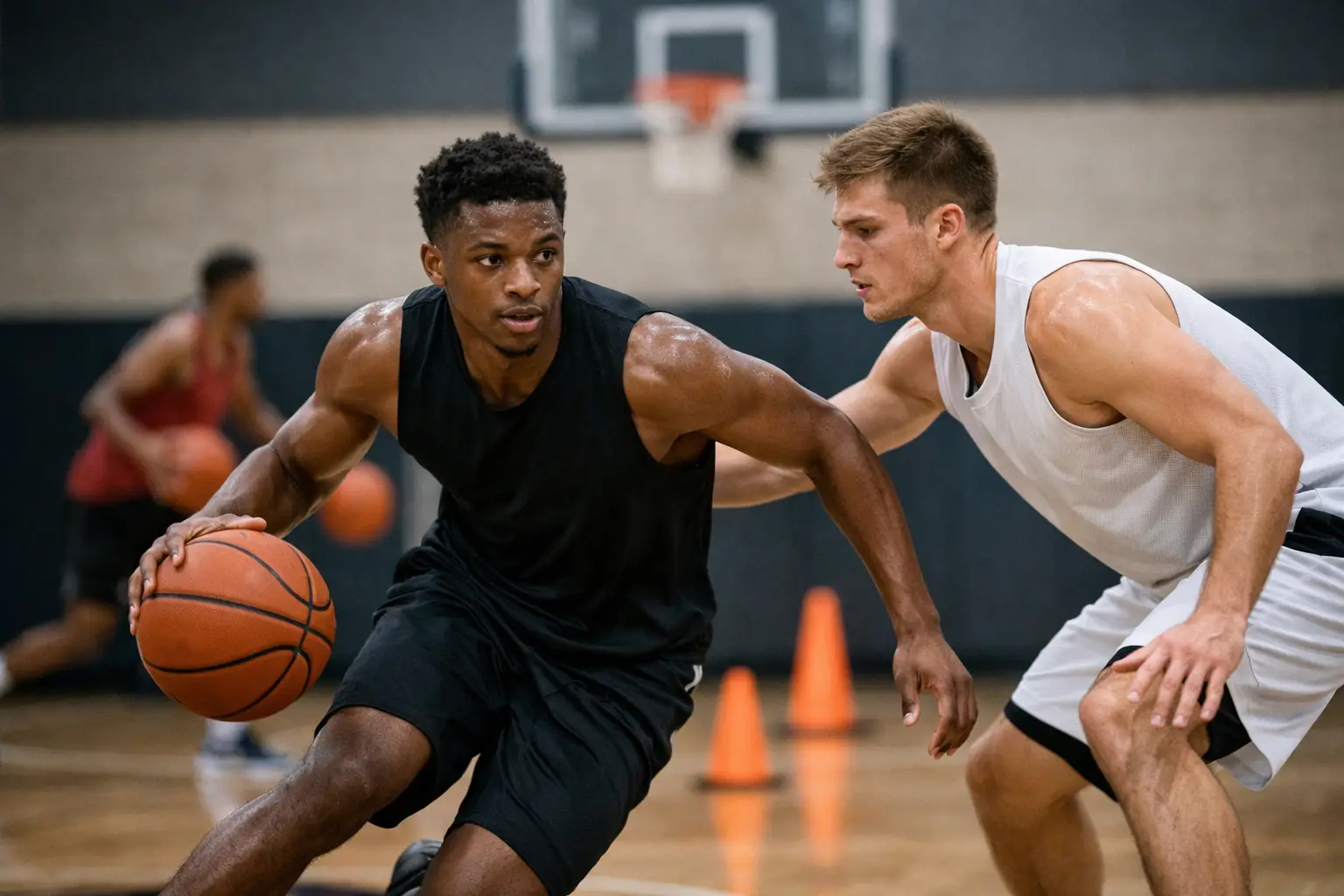
Eventually, every serious player has to handle the ball against a real defender. A coach, partner, or teammate can apply controlled pressure while the player protects, escapes, and re-attacks. This is where decision-making starts showing up.
Live pressure reveals the truth. If a player can only execute moves with no resistance, the work is incomplete. The best training environments build from stationary control to movement to pressure, because confidence grows when players see the skill hold up in real conditions.
How often should players train ball handling?
For most players, short and consistent beats long and random. Ten to fifteen focused minutes several times a week can create real change, especially for younger athletes. High-level players may need more volume, but not at the cost of quality.
It also depends on the athlete's goals. A beginner might need daily touch work just to build comfort. A varsity guard may need fewer basic reps and more advanced reads, pressure work, and move-to-finish sequences. The mistake is training without a plan.
What parents and players should look for in training
Not every drill is right for every age. A six-year-old does not need the same progression as a college guard. A player recovering confidence after turnovers needs a different approach than a naturally aggressive scorer who needs tighter control in traffic.
That is why structured development matters. The best programs do not just hand players a random list of moves. They assess where the athlete is, build the right progression, and coach the details that lead to visible improvement. That is how confidence becomes real instead of temporary.
If you are a parent, look for training that teaches more than flashy highlights. Look for posture, discipline, accountability, and progression. If you are a player, be honest about what breaks down in games. That is where your work should begin.
Turn drills into game results
Ball handling workouts should not live by themselves. Once a player can control the ball, the next step is connecting the handle to finishes, pull-ups, passing reads, and pressure situations. A clean crossover means more when it leads to an advantage. A strong retreat dribble matters more when it creates a better angle into the offense.
That is the standard. Not just doing drills, but building a handle that shows up when the gym gets loud, the defender gets physical, and the possession matters. Stay disciplined, train with intention, and keep stacking days. Your best handle is built one sharp rep at a time.

Comments