


Basketball Training for College Players That Works

College basketball does not wait for you to catch up. The pace is faster, the reads are tighter, and every weakness gets tested. That is why basketball training for college players has to be more focused, more demanding, and more honest than standard workouts. If the goal is real growth, training has to prepare you for the speed, physicality, and discipline of the college game.
A college player is not training for highlights. A college player is training for trust. Can you defend without fouling, make the simple read under pressure, finish through contact, and stay locked in when your minutes are not guaranteed? That is the standard. Your best days are in front of you, but only if your work matches where you say you want to go.
What basketball training for college players should actually target
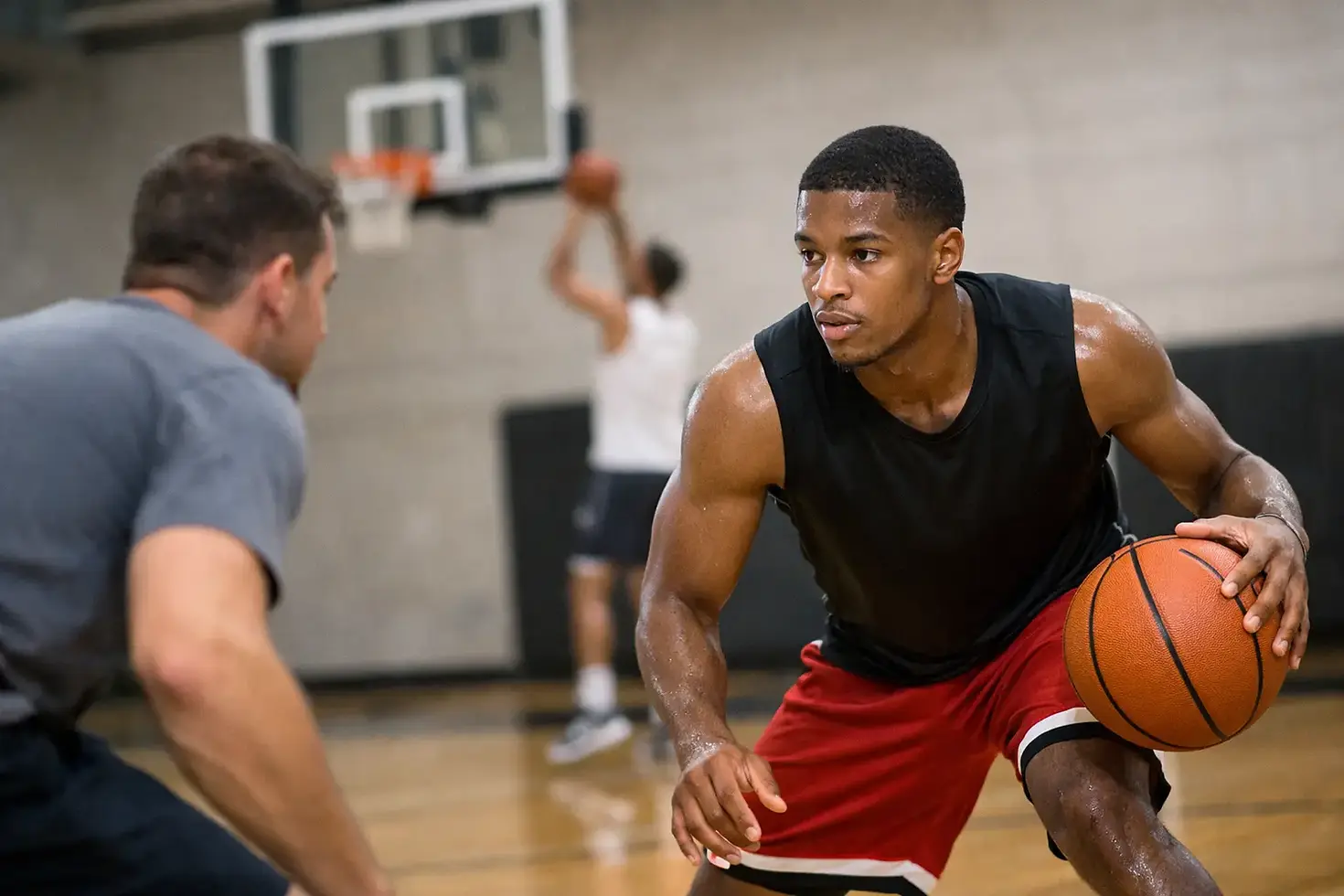
At this level, skill work alone is not enough. You can have a clean handle in an empty gym and still struggle when a defender shades you to your weak hand, a help defender is sitting in the gap, and the shot clock is shrinking. College training has to connect individual skill to game demands.
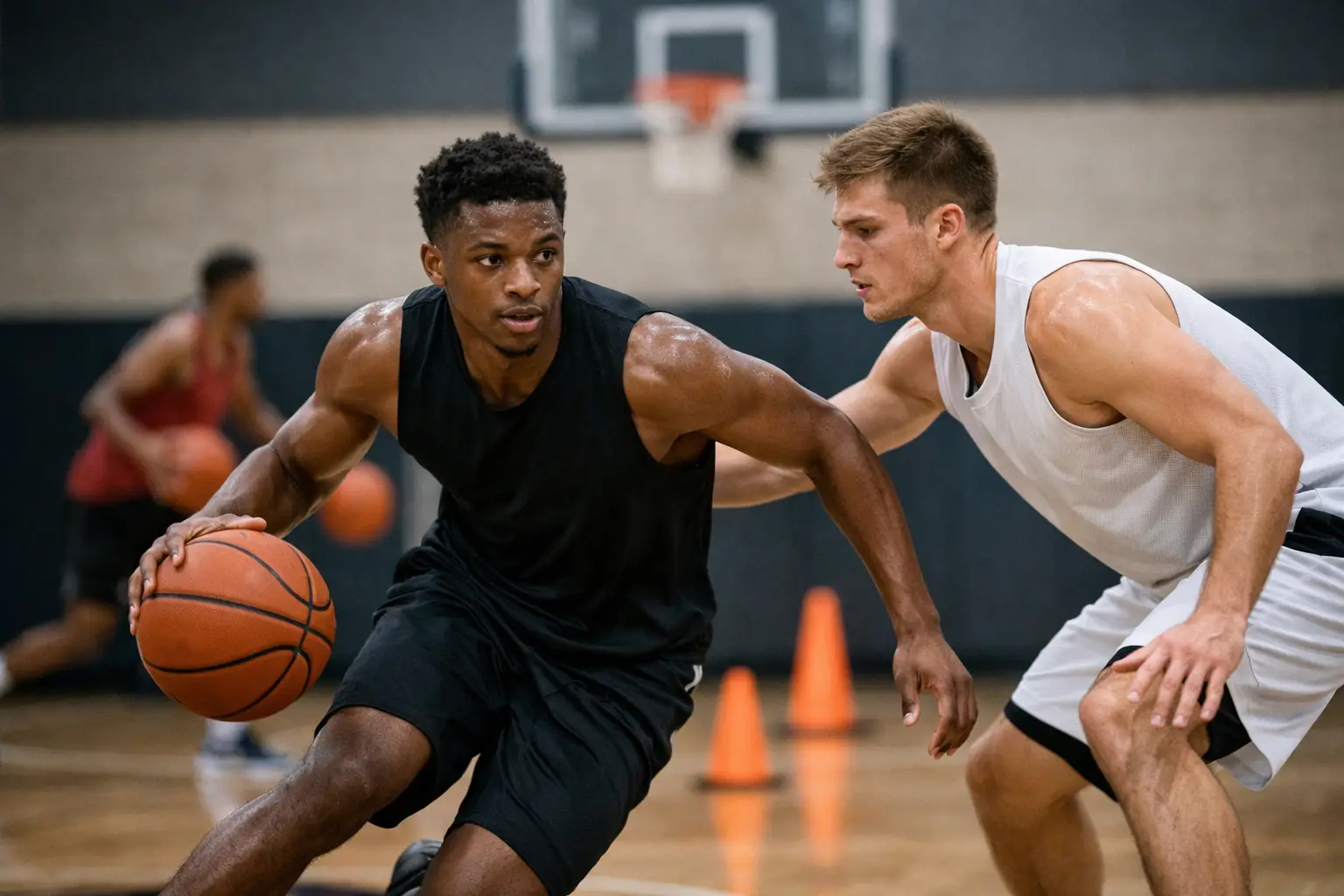
That means ball handling should include pressure, direction changes, and decision-making. Shooting should cover catch-and-shoot reps, movement shooting, and shots after contact or fatigue. Finishing work has to account for length at the rim, body control, and touch from different angles. Defense needs to go beyond effort and into stance discipline, closeout timing, screen navigation, and communication.
The strongest college development plans also address body maintenance. If your hips are tight, your ankles are unstable, or your conditioning fades late in sessions, your skill level will not show up when it matters. Training has to build a player who can perform hard, recover well, and repeat that process consistently.
Skill work has to look like the college game
A lot of players waste time doing workouts that feel intense but do not transfer. They stack flashy dribble combos, take shots they rarely get in games, or train at one speed. That can build confidence in the gym, but confidence disappears quickly when the game asks for different habits.
The better approach is simple. Train the actions you actually need. Guards should live in change of pace, ball-screen reads, pull-ups, paint touches, and weak-hand passing. Wings need footwork into catch-and-shoot opportunities, straight-line drives, transition decisions, and the ability to defend multiple spots. Bigs should train hands, finishing through traffic, touch around the rim, short-roll reads, rebounding position, and screen angles.
Every position still needs a complete base. Bigs cannot ignore mobility or shooting development. Guards cannot avoid contact finishing or defensive toughness. The difference is emphasis. Serious basketball training for college players builds role-specific strengths without boxing players into one-dimensional games.
Strength, speed, and durability are not optional
The college season puts stress on the body. Practices are demanding. Travel adds fatigue. Lifting, film, classes, and games all compete for energy. If your training does not respect that load, you can end up overworked or underprepared.
That is why performance work matters. A smart program should improve force production, lateral movement, deceleration, balance, and repeat effort conditioning. It should also include mobility and recovery habits that keep a player available. The best ability is still availability.
There is a trade-off here. More is not always better. Some athletes need extra strength work because they get bumped off spots too easily. Others need to move better and reduce wear because they are already carrying enough load. It depends on the player, the season, and the role. Good training is not random intensity. It is targeted stress with a purpose.
The mental side separates players fast
At the college level, talent gets you in the gym. Discipline keeps you on the floor. Players who improve are usually the ones who can take coaching, stay consistent, and compete even when results are slow.
That matters because development is rarely linear. You might shoot it well for two weeks and then hit a rough patch. You might earn more minutes and then face better defenders. You might feel great physically and then hit a stretch where your legs are heavy. A mature player does not panic every time performance fluctuates.
Training should build that mindset. It should challenge concentration, demand accountability, and teach players how to respond when reps are ugly. The gym is not just for making shots. It is for building habits that hold up when pressure rises.
In-season and off-season training should not look the same
One of the biggest mistakes college athletes make is training the same way year-round. That usually leads to burnout, dead legs, or workouts that ignore what the body actually needs.
Off-season training is the time to expand. You can clean up mechanics, add strength, sharpen footwork, and attack weaknesses with more volume. This is where real change happens because there is more room for adaptation. If a guard needs a better pull-up package or a forward needs to become a more reliable shooter, the off-season gives you space to build it.
In-season training is about maintenance, precision, and staying sharp without draining the tank. Reps still matter, but quality matters more than volume. Shorter skill sessions, game-speed shooting, mobility work, and recovery become more valuable than marathon workouts. The goal is to stay ready, not to win the workout.
Why assessments matter before the work starts
The fastest way to waste time is to train without a clear starting point. Every player says they want to get better, but better at what? Against what standard? In which situations?
An assessment brings clarity. It shows where a player is strong, where they leak possessions, and which habits need immediate attention. Maybe the issue is not shooting overall, but shot prep on the catch. Maybe the handle is fine in space but breaks down when the defender cuts off the first move. Maybe finishing numbers drop because the player avoids contact, not because touch is poor.
That level of detail matters. Players improve faster when the plan is built around actual needs instead of guesswork. That is one reason serious development programs stand out. They do not throw every athlete into the same workout and hope for progress.
What to look for in a college-level training program
If you are choosing a trainer or program, look past energy and slogans. The work has to be organized. It should have progression, clear standards, and a reason behind each phase.
A strong program should offer a path that matches the athlete. Some players need one-on-one attention to rebuild weak areas. Others benefit from competitive group sessions that sharpen decision-making and pace. Online training can help with consistency and structure between live sessions, but it works best when it supports a clear development plan rather than replacing coaching entirely.
You should also look for accountability. Are reps tracked? Is progress measured? Are players being challenged beyond their comfort zone? Real training is not about keeping athletes entertained. It is about helping them grow, even when the work is demanding.
For Texas athletes trying to raise their level, King Of Bounce Training stands out when the goal is structured player development with options that fit where you are now and where you want to go next.
Basketball training for college players is about role, not ego
Every college player wants a bigger game, and that ambition is good. But growth comes faster when players understand how they can help a team right now while still developing for more later.
If you are a guard fighting for minutes, elite ball security, on-ball defense, and reliable decision-making may matter more than deep step-back range. If you are a wing, becoming a dependable shooter and versatile defender may open doors before advanced isolation scoring does. If you are a post player, setting stronger screens, owning the glass, and finishing efficiently may earn trust faster than forcing perimeter creativity that is not ready yet.
That does not mean staying limited. It means building from what wins possessions first. The smartest players train for impact, not image.
The players who make the jump usually do this differently
They train with intent. They stop chasing random drills. They take recovery seriously. They accept hard coaching. They understand that confidence comes from preparation, not talk.
Most of all, they stay with the process long enough to see it work. That is where separation happens. Not in one workout, not in one viral clip, and not in one hot shooting day. It happens through disciplined reps stacked over time with a plan that matches the level.
If you are serious about competing at a higher level, train like your role depends on it, because it does. Stay hungry, stay coachable, and keep building the version of your game that college basketball respects.

Comments